
Call: 602-264-0707
Does Invisalign Hurt and How Long Does the Soreness Last?
November 5, 2026
Invisalign
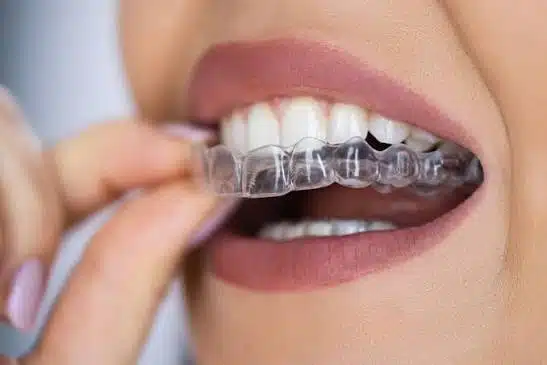
People considering clear aligner treatment often ask, “Does Invisalign hurt?” Invisalign can cause temporary pressure and tooth soreness, especially when treatment begins or a new aligner is inserted; discomfort usually eases within a few days. The Invisalign treatment page at Highland Dental Studio Phoenix explains the practice’s process.
Does Invisalign hurt when you first put the aligners in?
Most patients notice pressure or mild tenderness rather than sharp pain when they begin wearing Invisalign. The aligners apply controlled force to move teeth gradually. That force affects the periodontal ligament, the tissue connecting each tooth to the surrounding bone. Temporary tenderness can occur as the tissues respond.
You may notice pressure when biting, chewing, or removing the trays. The level of discomfort varies with the treatment plan and individual response. A properly made aligner should fit securely, but it should not cause persistent sharp pain or cut the gums. If an edge rubs or the tray does not seat fully, contact your provider. Do not trim or reshape it yourself.
How long does Invisalign soreness usually last?
Soreness commonly feels strongest during the first 24 to 48 hours and then decreases over the next several days. A 2026 systematic review of removable aligners found that reported pain peaked around 24 hours, decreased by day three, and was minimal by one week. The authors noted substantial variation among studies.
A similar pattern may occur when you change to a new aligner. Each tray guides the next stage of movement, so a new set can create renewed pressure. Highland Dental Studio Phoenix states that patients generally wear each set for one to two weeks. Follow the change schedule provided for your treatment.
The following table summarizes the typical adjustment period.
| Treatment stage | What you may notice |
|---|---|
| First day with a new set | Tightness or tenderness |
| Days two to three | Soreness, particularly when chewing |
| Later in the week | Discomfort generally becomes less noticeable |
| After changing trays | Mild pressure may return temporarily |
This timeline is a general pattern, not a guarantee. Contact your provider if soreness is not improving after several days or becomes more intense.
Why do new Invisalign trays make teeth sore?
A new aligner can feel sore because it applies planned force to guide teeth toward their next positions. This pressure is part of orthodontic tooth movement. It does not automatically mean that a tooth is being damaged.
Discomfort can vary because of the amount of planned tooth movement, initial adjustment to the appliance, individual sensitivity, or aligner fit. Small tooth-colored attachments bonded to selected teeth help the aligner control movement; the area around an attachment may feel different. A damaged edge or tray that does not match the current stage may cause localized irritation.
A prospective study of 87 adults found that pain patterns differed across appointments and between clear aligners and fixed appliances.
What can you do to relieve Invisalign soreness?
Mild aligner soreness can often be managed with softer foods, cold water, and pain relief approved by your dentist. These measures may reduce discomfort while your mouth adjusts, but they do not replace an examination when pain is severe or unusual.
During the first few days of a new tray:
- Choose softer foods. Try yogurt, scrambled eggs, oatmeal, pasta, or soup if chewing feels uncomfortable.
- Drink cool water. It may temporarily soothe tender areas. Do not chew ice, which can damage teeth.
- Follow your wear schedule. Highland Dental Studio Phoenix advises wearing aligners for 20 to 22 hours daily, removing them for meals and oral hygiene. Do not repeatedly remove trays to avoid pressure unless your provider tells you to.
- Ask before taking medication. Check with your dentist or pharmacist whether an over-the-counter pain reliever, such as acetaminophen or ibuprofen, is appropriate. Follow the label and consider your medical history, other medications, allergies, and pregnancy-related precautions.
- Check the tray. Confirm that it is the correct set and is seated as instructed. Do not force a tray that will not fit.
The American Association of Orthodontists notes that mild discomfort can occur during the initial adjustment period. Cleveland Clinic also recommends soft foods and cold measures for temporary discomfort.
When should you contact your Invisalign provider about pain?
Contact your dentist or orthodontist if pain is sharp, worsening, focused on one tooth, or not improving after a few days. These symptoms may indicate a fit problem or another dental issue that needs examination.
Arrange an assessment if you notice:
- A cracked, warped, or poorly fitting tray.
- A sharp edge that cuts or rubs your cheek, tongue, or gum.
- Gum swelling, bleeding, or a sore that does not settle.
- Persistent pain when biting or pain focused on one tooth.
Do not skip to the next tray, return to an earlier tray, or stop treatment for an extended period without instructions. Your provider can check the aligner, attachments, tooth movement, and bite. Seek urgent care for severe swelling, fever, facial swelling, or difficulty swallowing or breathing.
Is Invisalign soreness a reason to avoid treatment in Phoenix?
Mild, short-lived pressure is common during clear aligner treatment and does not, by itself, mean Invisalign is unsuitable. Suitability depends on bite position, tooth alignment, gum health, and the movements required.
Patients researching Invisalign in Phoenix can ask Highland Dental Studio Phoenix about expected pressure, tray changes, wear time, and ways to manage tenderness. A dental evaluation can establish whether clear aligners are appropriate.
To discuss symptoms or arrange an evaluation, contact Highland Dental Studio Phoenix or view the practice’s Google Business Profile.
Frequently Asked Questions
Does Invisalign hurt more with the first aligner?
The first aligner may cause noticeable pressure because your teeth and surrounding tissues are adjusting to orthodontic movement.
Does Invisalign hurt every time you change trays?
Mild pressure or tenderness can return temporarily with each new aligner, although the intensity varies throughout treatment.
Can I eat normally when my teeth are sore from Invisalign?
Yes, but softer foods such as yogurt, pasta, oatmeal, and scrambled eggs may be easier to chew during the initial adjustment period.
Should I stop wearing Invisalign if it hurts?
Do not discontinue treatment without consulting your dentist, particularly if the discomfort is persistent, sharp, or associated with an aligner that does not fit.
Is Invisalign supposed to hurt when removing the trays?
Some pressure or tenderness can occur during removal, especially with a new aligner, but sharp pain or difficulty removing a tray warrants professional evaluation.
Recent Posts
Nov. 13, 2026
Do I Have to Wear a Retainer After Invisalign, and for How Long?
Nov. 05, 2026
Does Invisalign Hurt and How Long Does the Soreness Last?

Oct. 27, 2026
Why Do I Have Bad Breath Even When I Brush and Floss?

Oct. 22, 2026
What Are the Early Signs of Gum Disease?

Oct. 15, 2026