
Call: 602-264-0707
The Stages Involved in the Dental Implant Procedure
February 14, 2023
Dental Implants
Introduction
Having a healthy and attractive smile starts with having good oral hygiene, but for those missing teeth this can be difficult to achieve. Dental implants are artificial replacements for natural teeth, providing you with a secure and permanent solution. The dental implant procedure can be broken down into a few different stages, each of which will be discussed in more detail below.
1. Consultation and Planning
During the first stage, you will have a consultation with your dentist to discuss your treatment options. This is also an opportunity for your dentist to get to know you, discuss any allergies or existing medical conditions and for you to ask any questions about the procedure. After the consultation, the dentist will take some X-rays and Impressions of your mouth in order to create a detailed plan for the implant surgery.
X-Rays: X-rays are used to determine the amount of bone available for the implant and if you have any other issues that could affect the success of the procedure.
Impressions: Impressions are taken using dental putty which is placed in your mouth to make a negative mould. This is then used to make a positive model of your teeth which can be used by the dentist to plan the placement of the implant.
Treatment Plan: After taking X-rays and Impressions, your dentist will develop a treatment plan specifically for you. This will take into account the number of implants you need, the type of implant, the positioning and any additional treatments that may be required.
2. Placement of Implants
The second stage is surgery to place the implants in your jawbone. This procedure is usually done under local anaesthetic with sedation or general anaesthetic in more complex cases. The surgeon will make a small incision in your gums and carefully place the implants in your jawbone. Once they are in place, the surgeon will close up the site with stitches before leaving you to recover.
Incision: The incision is made in order to access the area of the jawbone where the implant will be placed.
Placement of Implants: The implants are carefully placed in your jawbone and screwed into place. This helps to ensure that the implant is securely attached and can withstand chewing forces when it is loaded with a restoration.
Recovery: After surgery, you will need to take some time to recover. This usually involves taking pain medication and eating soft foods while the incision site heals.
3. Attachment of Abutment
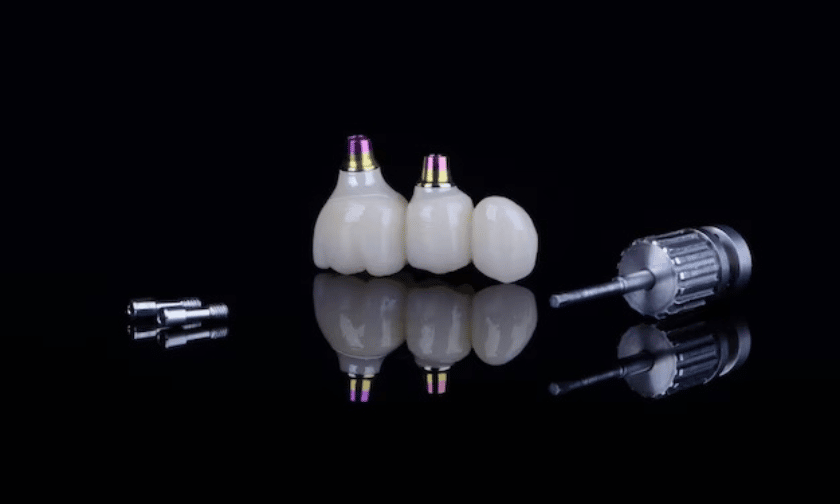
The third stage is the attachment of the abutment, which is a small connector piece that attaches the implant to the restoration. This procedure is less invasive than placement of the implant and is usually done with local anaesthetic. During this stage, your dentist will uncover the top of the implant and then attach the abutment to it. Once this is done, impressions are taken in order to make a custom restoration for the newly placed implant.
Uncovering Implant: The implant is uncovered in order to access the top of it. This allows your dentist to attach the abutment securely.
Attaching Abutment: The abutment is a small connector piece that attaches the implant to the restoration. It is carefully attached to the implant and screwed into place.
Impressions: Once the abutment is attached, impressions are taken in order to make a custom restoration for the newly placed implant. This custom restoration will be designed specifically for you, ensuring that it fits your mouth perfectly.
4. Restoration Placement
The fourth stage is the placement of the restoration. This is usually done with local anaesthetic and involves attaching the custom-made restoration to the abutment on the implant. Once this is done, your dentist will check that it fits properly before allowing you to leave.
Attaching Restoration: The restoration is carefully attached to the abutment on the implant. This helps ensure that it fits properly and can withstand chewing forces when fully loaded.
Checking Fit: Once the restoration is attached, your dentist will check that it fits properly before allowing you to leave. This helps to ensure that it is comfortable and secure.
Conclusion:
The dental implant procedure is a multistep process that can be done in stages over the course of several months. It involves placing implants in your jawbone, attaching an abutment to the implant, taking impressions for a custom restoration, and finally attaching the restoration to the implant. This process can help to restore your smile and improve your dental health.
FAQs:
Q1. What is the dental implant procedure?
A1. The dental implant procedure involves placing implants in your jawbone, attaching an abutment to the implant, taking impressions for a custom restoration, and finally attaching the restoration to the implant.
Q2. How long does the dental implant procedure take?
A2. The dental implant procedure can take several months to complete, as it involves multiple stages of treatment.
Q3. Is dental implant placement painful?
A3. Generally speaking, dental implant placement is not too painful as local anaesthetic is used during each stage of the procedure. However, you may experience some pain and discomfort during the recovery process.
Recent Posts

Apr. 07, 2026
Top-Rated Family Dentist: Why Patients Choose Highland Dental Studio Phoenix

Mar. 27, 2026
When Is the Right Time to Get Dental Implants After Bone Grafting?

Mar. 20, 2026
Are Dentures a Smart Choice for Missing Teeth in Phoenix: Is It Worth It?

Mar. 13, 2026
What Happens If You Switch to Invisalign During Orthodontic Treatment?

Mar. 06, 2026